Bringing Siberian Cranes back to India
“The story of the International Crane Foundation (ICF) began in 1971 at
Cornell University
with two students who shared a passion for cranes. Ornithology students Ron Sauey and
George Archibald envisioned an organization combining research, captive breeding and
reintroduction, landscape restoration and education to safeguard the world’s 15 crane species.
In 1973, with the generosity of the Sauey family – who rented their horse farm to Ron and
George for $1 a year! – the International Crane Foundation “hatched” in Baraboo, Wisconsin.
Over all these years, the ICF has developed unique collaborations and led effective
community-based conservation programs, important research projects and innovative captive
breeding and reintroduction efforts. These endeavors have inspired international cooperation,
helped improve people’s livelihoods, and protected millions of acres of wetlands and
grasslands on the five continents where cranes live.
George Archibald has a vision: Siberian Cranes be introduced back in India, they became
extinct during 2002. He has addressed the proposal to several experts across the globe,
including forest authorities in India’s Rajasthan where is located Keoladeo National Park, the
last home of these birds. They migrated from Russia to India to winter at this wetland.
It is a mega plan. ICF is keen. So are Russian experts. India has to take the cue.
Harsh Vardhan is acting as coordinator for this ambitious way ahead. News below is
provided by Elena Ilyashenko, in charge of Crane Project in Russia. It is about the Western
flock of Siberians having been recorded amongst the Eastern flock of same species (in
China).
About banded Siberian Crane met in China in November 2020 by
A.Shililna, by A. Sorokin, by Yu.Markin
On November 17, 2020, Siberian Crane Flyway Coordinator, Elena Ilyashenko sent us a
photo and a request from Chinese specialists: what is known about the banded Siberian Crane
(left leg - red and green color plastic rings, right - metal ring) which was found in a flock of
Siberian Cranes in the Yellow River Delta. At the same time, this question was asked to
specialists from Mongolia, China and Russia, who are conducting research on the eastern
population of the Siberian Crane and conducting work on marking the Siberian Crane of this
population. Everyone answered that the Siberian Cranes of the eastern population were not
marked with such a ring combination.
We checked our database of banded Siberian
Cranes reintroduced into the wild in order to
conserve and restore the West Siberian population.
The Siberian Crane, marked with a red and green
ring on the left leg and a metal ring A 16030 on the
right leg, was released at the age of about 3 months
in 2003 in the breeding place of the Siberian
Cranes in the Kunovat River basin (Yamalo-Nenets
Autonomous Region, Russia) in a group of 6
Siberian Cranes .
According to the International Siberian Crane
Stubook (2014), its number is 507, date of birth 16,
May, 2003, name Olenek, sex - male. Olenek was
born in the Oka Breeding Center (Russia), he is
costume isolated rearing bird.
Information about marking of this Siberian Crane
was published in the Crane Working Group Of
Eurasia Newsletter (No. 7-8, 2004: 42-43).
It seems extremely interesting to discover if this
Siberian Crane has a pair and chicks, where are its
breeding and wintering grounds.
So, Siberian Crane have been released by the young bird at the breeding grounds of
Western Siberia population was recorded 17 years later at the migratory stopover of the
Eastern population the Siberian Crane.
This record raises many questions about the relationship of the two populations, migration
routes, breeding places, wintering grounds and provides new information for assessing the
effectiveness of Siberian Crane reintroduction work.
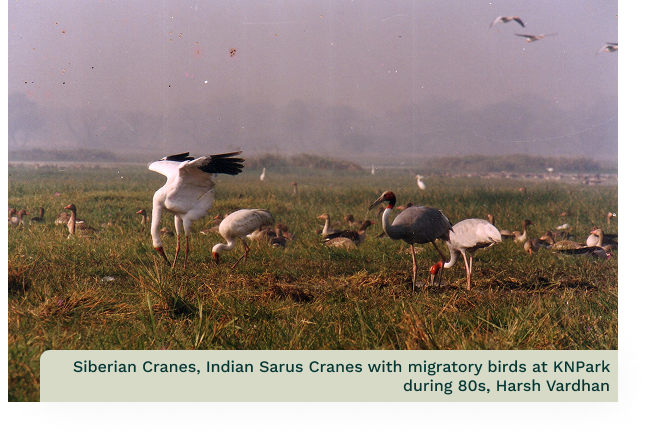
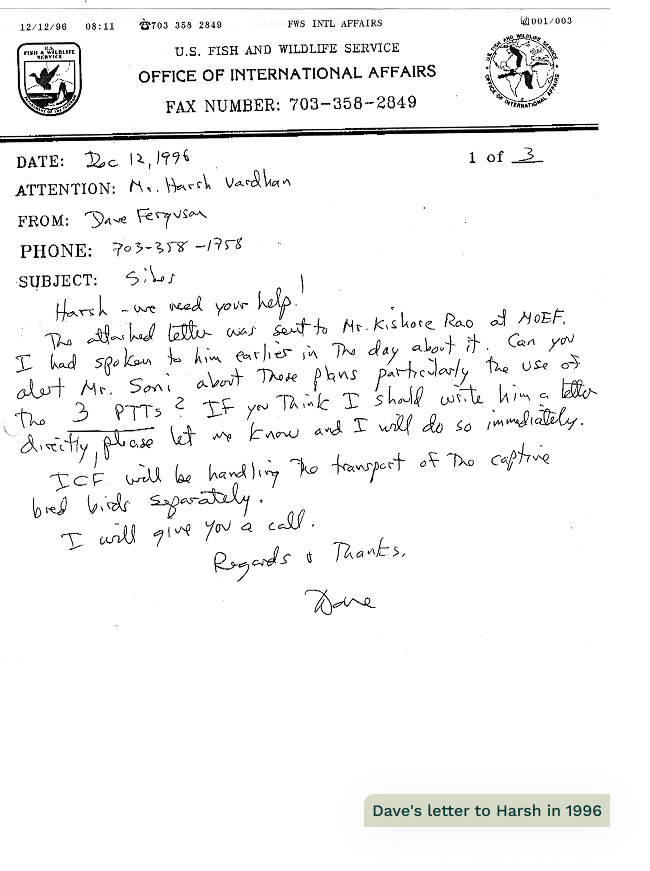
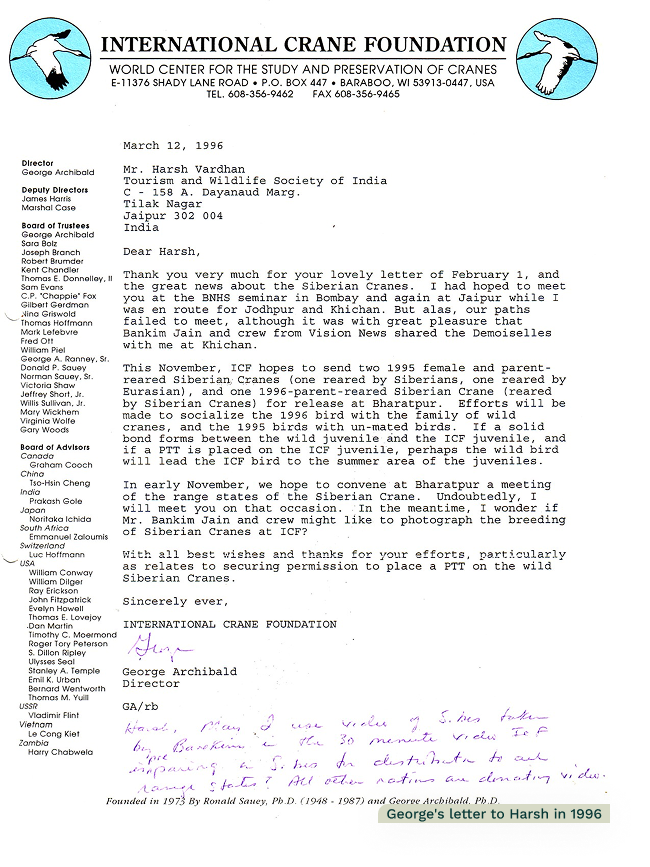
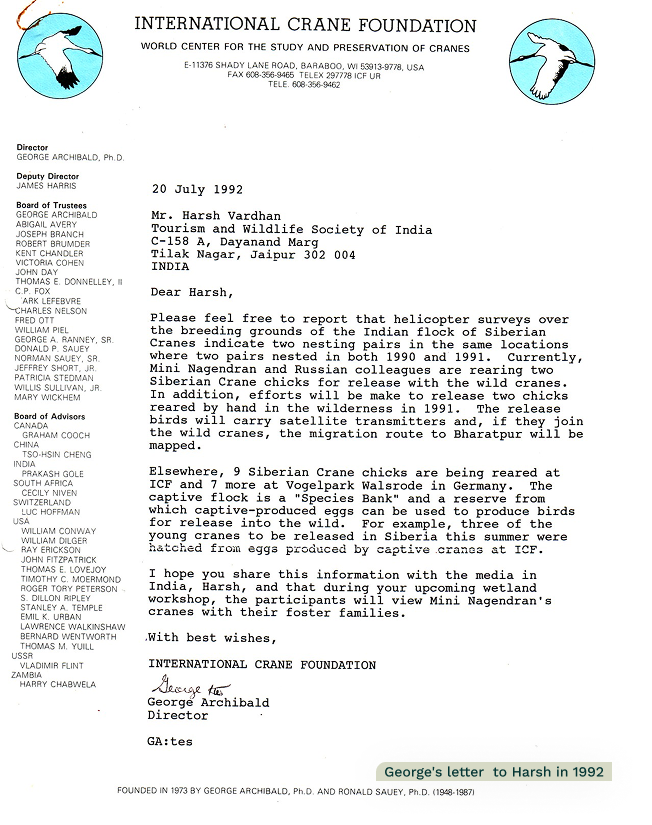
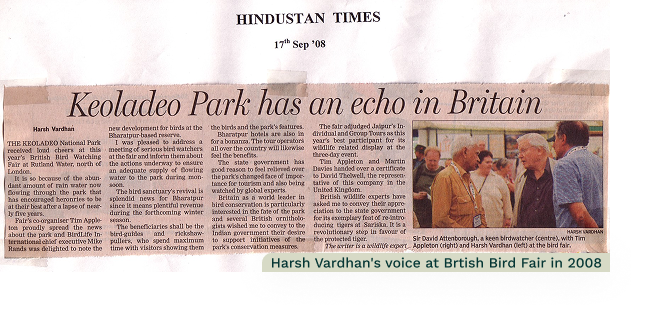
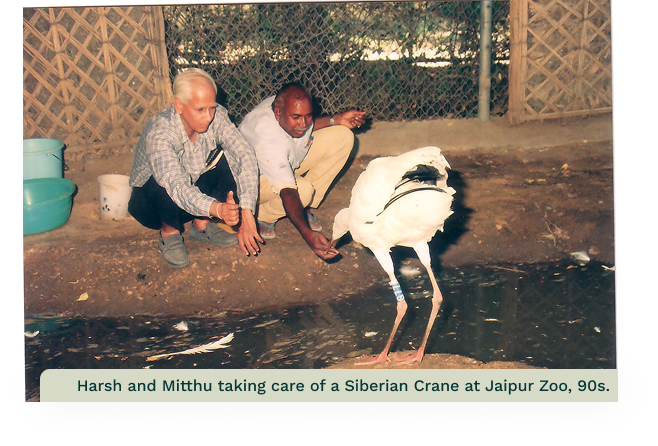
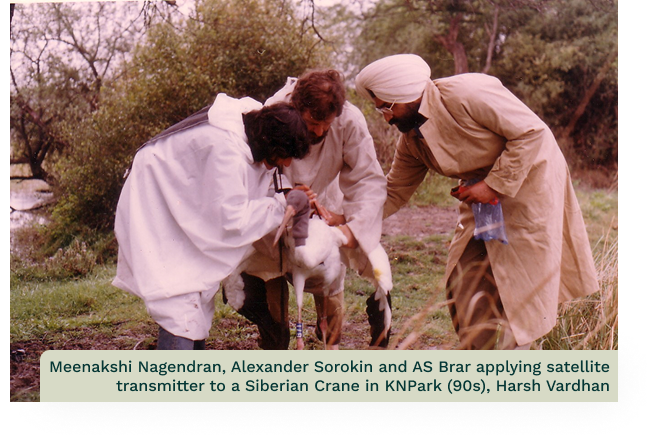
Note: Along with this narrative, we reproduce some archival letters and
photographs of
international cooperation executed in India during 80s and 90s to conserve Siberian
Cranes.
More details can be obtained from:
ICF: info@savingcranes.org
and
Elena Ilyashenko at eilyashenko@savingcranes.org
Crane
Bibliography by
Elena Ilyashenko